Blog
Renal Denervation Comes to Delray: An Option for Blood Pressure That Won't Come Down
HypertensionTechnology & InnovationDelray Medical Center
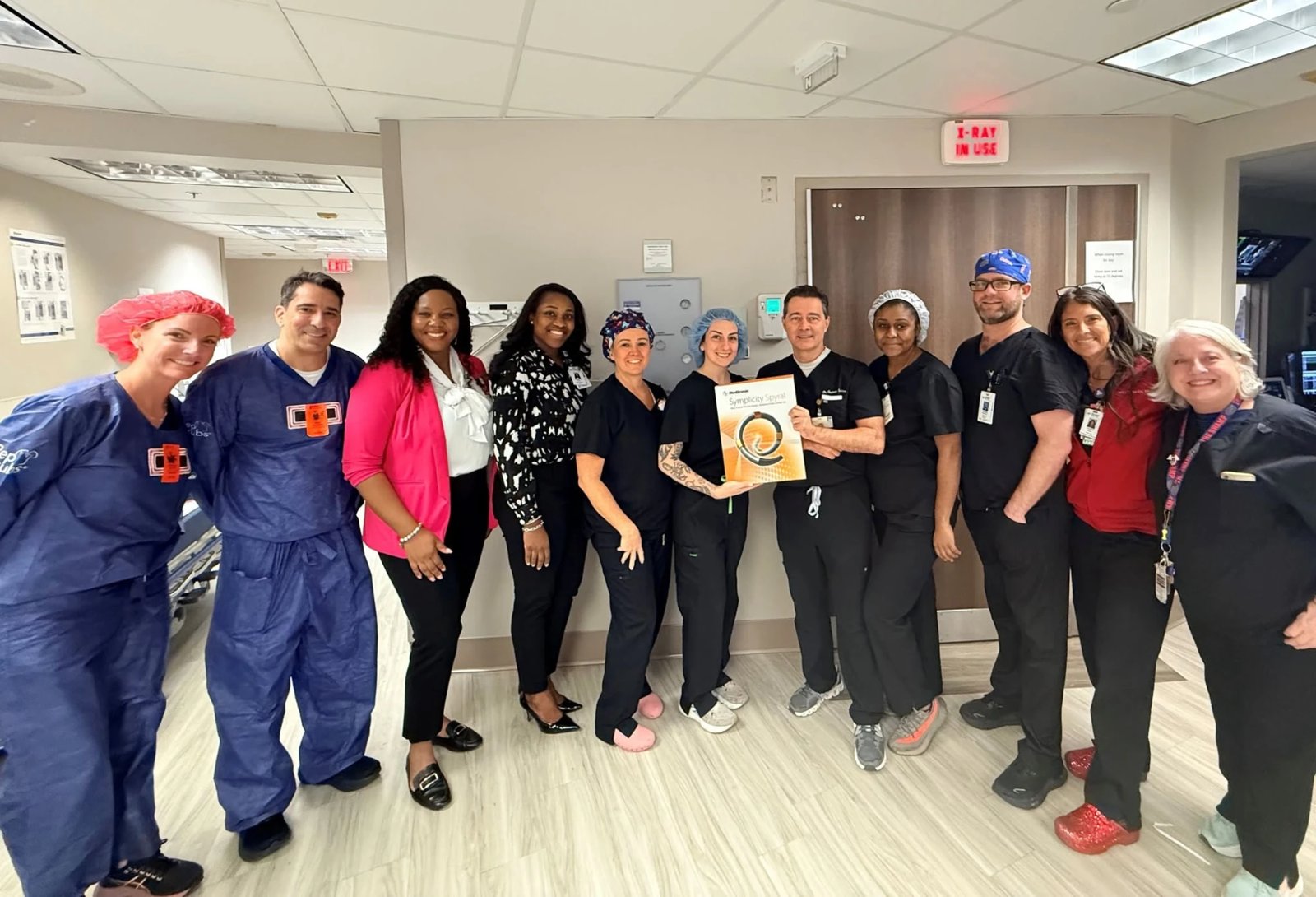
I care for many patients who take four or five blood pressure pills and still see numbers that worry both of us; doctors call this resistant hypertension. Others can't tolerate adding another pill. For some of these patients there is now a new option close to home. Delray Medical Center has performed its first renal denervation, a procedure done through a small puncture rather than surgery that quiets overactive nerves around the kidney arteries. Dr. Gustavo Cardenas, an interventional cardiologist, performed the case with the hospital's cardiac catheterization team. It isn't a cure, and it isn't for everyone. Here is what it does, what the research shows, and who it's meant for.
Key Findings & Takeaways
- How it works: The nerves that run along the arteries to your kidneys help set your blood pressure, and in many people with hard-to-treat hypertension they're overactive. Through a small puncture, usually in the groin, a thin tube called a catheter is threaded into each kidney artery, and a burst of energy quiets those nerves from inside the artery. Nothing is left behind in the body. The FDA approved two devices in late 2023, one using radiofrequency energy and one using ultrasound; Delray uses the radiofrequency system, Symplicity Spyral.
- What it does to blood pressure: A 2026 review in JAMA pooled 10 trials with about 2,500 patients in which the comparison group had a sham, or "pretend," procedure, so that hope or expectation alone couldn't explain the result. Renal denervation lowered systolic (top number) pressure by about 4 to 5 points more than the sham on 24-hour monitoring (a cuff worn around the clock), and about 6 to 7 points more in the office. That may sound modest, but it held up in trials of people both on and off their usual medications, and even a few points of lasting reduction matters for the heart, brain and kidneys over time.
- It's an add-on, not a replacement: In one smaller trial, the lower pressure was still there three years later, though by then patients and doctors knew who had the procedure. Most people stay on their blood pressure medications afterward. I think of it as one more tool alongside the pills, not a way off them.
- Who it's for: The 2025 American Heart Association and American College of Cardiology blood pressure guideline says renal denervation may be considered, a cautious recommendation, for selected adults whose blood pressure stays uncontrolled on the best medication regimen we can build, or who can't tolerate adding more. Not every kidney artery is the right size or shape for it, and your kidney function has to be good enough. The guideline also calls for evaluation by a team and a shared decision with the patient, and that's how my colleagues and I are approaching it. Medicare began covering renal denervation in late 2025 for patients who meet its criteria and are enrolled in an approved study or registry; private insurance varies, so check before you plan on it.
- What comes first: Before a procedure, I want to be sure the high readings are real, using home or 24-hour monitoring, and that medications are being taken as prescribed. I usually have patients try spironolactone, a pill that blocks a salt-retaining hormone, first; it needs blood tests to check potassium and kidney function. We also look for treatable causes, especially primary aldosteronism, a hormone problem from the adrenal glands and one we miss more often than we should.
- The honest limits: Not everyone responds, and there's no test that predicts who will, though people with higher starting pressures tend to see bigger drops. We also don't yet have trials showing that renal denervation prevents heart attacks or strokes. The expected benefit comes from what we know about lowering blood pressure in general.
- Safety: Serious complications were uncommon in the trials. The main risks are bleeding or bruising where the catheter goes in, a small dose of X-ray contrast dye that matters more if your kidneys are weaker, and, rarely, a later narrowing of a kidney artery, which is something I watch for afterward.
If your blood pressure is still high on three or more medications at full doses, including a water pill (diuretic), the first step isn't a procedure; it's a careful look at the readings, the medications and the possible causes. If you've done all of that, or you can't tolerate another pill, bring a week of home readings and your full medication list to your cardiologist and ask whether renal denervation makes sense for you. For transparency, I chair the cardiology department at Delray Medical Center. This is general information, not advice about your own care.
Reference Source: Circulation — 2025 AHA/ACC Guideline for the Prevention, Detection, Evaluation and Management of High Blood Pressure in Adults
Journal Article: JAMA — Diagnosis and Management of Resistant Hypertension: A Review
Journal Article: American Journal of Hypertension — Renal Denervation to Treat Hypertension: A Clinical State-of-the-Art Review
Journal Article: The Lancet — Long-term efficacy and safety of renal denervation in the presence of antihypertensive drugs (SPYRAL HTN-ON MED)
This article relates to High blood pressure care — learn how Dr. Vafai can help or schedule a visit.