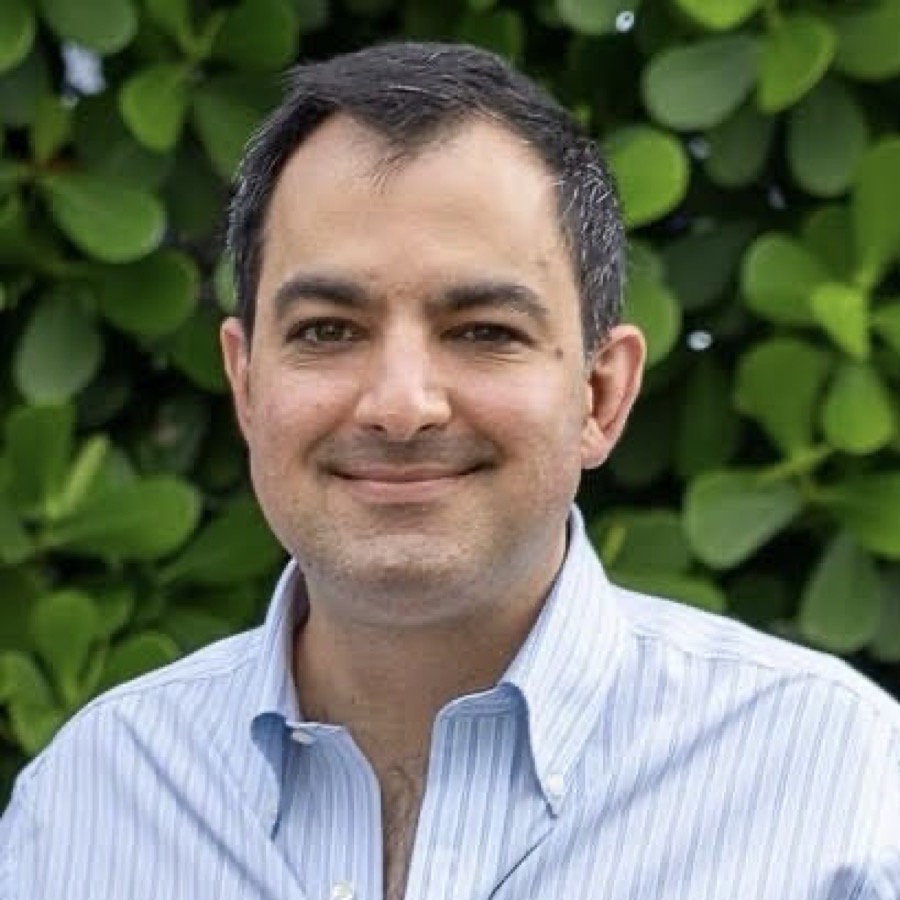
Jonathan Vafai, MD
A board-certified cardiologist, bringing nearly two decades in cardiovascular medicine to the prevention, diagnosis, and long-term treatment of heart conditions.

About
Dr. Vafai has been seeing patients at South Florida Heart Institute in Delray Beach since 2011.
Since beginning advanced cardiology fellowship training in 2007, Dr. Vafai has devoted nearly two decades to cardiovascular medicine.
He chairs the Department of Cardiology at Delray Medical Center, a role that reaches beyond his own patients into credentialing, policies and protocols, peer review, and a seat on the hospital's Medical Executive Committee. He also serves as Medical Director of the Echocardiography Laboratory there, and previously served as Vice-Chairman of the Department of Medicine from 2018 to 2020. He is core clinical faculty for the FAU Cardiology Fellowship at Florida Atlantic University's Schmidt College of Medicine, mentoring two fellows each year in echocardiography and cardiac imaging.
He trained at NYU School of Medicine, completed internal medicine training at Beth Israel Deaconess Medical Center (Harvard Medical School), and served as Chief Fellow during his cardiology fellowship with the NYU program at Northwell Health. He is a Fellow of the American College of Cardiology and the American Society of Echocardiography.
He has practiced with the same group, South Florida Heart Institute, since 2011. When a patient is admitted to Delray Medical Center, any member of that trusted team may care for them in the hospital, but Dr. Vafai remains their primary cardiologist: the one who knows their history and picks up the thread when they go home.
Philosophy of care
Cardiology has been my sole focus and life's work. I care deeply about my patients and approach every visit the way I would want my own family to be treated—with time, honesty, compassion, and respect.
My philosophy is lifestyle first whenever possible. Exercise, nutrition, and daily habits form the foundation of heart health, and medications or procedures are added thoughtfully when they truly serve your best interest. When I make a recommendation, it is never routine—it is based on experience, evidence, and a genuine belief that it is right for you.
My role is to educate, guide, and offer clear advice; your role is to make the decisions that feel right for your life and values. The best care happens when we work together through shared decision-making.
I have trained at leading hospitals in New York and Boston, and that experience continues to guide my care today. Even while practicing here in Florida, I rely on a broad national perspective and a trusted network of outstanding specialists. When referrals are needed, I send patients to people I trust and would confidently recommend to my own family.
I am deeply grateful for the trust my patients place in me. It is a privilege to care for you and to be part of your team.
— Jonathan Vafai, MD
Outside the office
I decided on cardiology in medical school, while helping care for a man through a heart attack, bypass surgery, and the long recovery that followed. What struck me was not the operation. It was being one of the people who saw him through all of it. Cardiology is full of that: relationships measured in years and built on trust, where you follow the same person through the decisions that matter instead of meeting them once.
Imaging became my corner of it for a related reason. An echocardiogram lets you see what is happening inside someone's chest without doing anything invasive to them — how the muscle is moving, how the valves are working, how the heart is filling and emptying. A tremendous amount can be learned about a person's heart from a probe, some gel, and the patience to read the study carefully. That has never stopped appealing to me, and it is why I still read my own patients' studies rather than handing them off.
I have also stayed where I am because of who I work with. My partners are among the smartest and most caring physicians I know. We collaborate constantly and challenge each other just as often, which is the part that keeps you sharp. The honest measure of it is this: when I am away, I am glad they are the ones looking after my patients, and I have trusted them with my own family.
I grew up in New Jersey and spent medical school, residency, and fellowship between New York and Boston before coming to Florida.
Most of what I recommend to patients about exercise, I am also negotiating with myself. I ride a Peloton at home, two or three times a week when the schedule cooperates, which is less than I would like and probably sounds familiar to anyone trying to fit training around a job. I ride to keep my endurance up, not to win anything. When I tell someone that the unglamorous easy-pace riding is doing most of the real work, I am describing what I do myself rather than reciting a guideline.
When I have time I also shoot photographs — finding the image, working on it afterward, and showing it to someone. There is probably a reason the imaging side of cardiology appealed to me.
More than anything, I am watching lipids. Lp(a), ApoB, and the therapies arriving now for people statins were never going to be enough for. For most of my career we have treated cholesterol through convenient proxies; we are getting closer to treating the things that actually drive risk, and that is the most genuinely exciting development I have seen in cardiology in some time.
I am an interested skeptic about AI in medicine, and the way I got there was by using it rather than reading about it.
The one that changed my days most is the ambient scribe. It listens to the visit and drafts the note, which means I am looking at the person in front of me instead of at a screen, and the note is finished when the visit is. The platform is private and HIPAA-compliant, and recordings stay inside that protected environment. Anyone who has watched a doctor type through their appointment knows what the old way was costing.
For research it has collapsed the time between a question and a defensible answer. When an unusual case or a newly published trial comes up mid-clinic, I can have the research in a minute or two rather than at the end of the day. In imaging, HeartFlow and Cleerly analysis of coronary CT do real work on studies I would otherwise be interpreting with less information.
Then there is the unglamorous half: letters, prior authorizations, the administrative sediment that accumulates around medicine and has nothing to do with caring for anyone. Handing that to a machine is not a clinical breakthrough, but it gives hours back.
The surprise has been programming. I wrote code before medicine took over, and that part of me had quietly atrophied for twenty years. These tools threw me straight back into software development — this website and the system that publishes my blog posts are things I build and maintain myself, and I have several other apps underway, some for the practice and some purely for my own interest. It has made me a far better judge of AI than any amount of reading would have, because you learn quickly where it is strong and exactly where it is confidently wrong.
That last part is the whole of my skepticism. A tool that is right most of the time is a different thing from a tool you can stop checking, and the distance between those two is exactly where patients get hurt. I treat all of it as capable assistance and nothing more.
Clinical focus
Clinical cardiology
Most of my week is general cardiology: the visit where we work out whether a symptom is the heart at all, and the long-term follow-up of patients I've known for years. I also care for patients in the hospital at Delray Medical Center, so office and inpatient care aren't two separate worlds.
Cardio-oncology
Some cancer treatments can affect the heart, occasionally years later. I work alongside oncologists at Delray Medical Center and area cancer centers to watch for that early. A deep background in imaging and keeping current with newer chemotherapy and immunotherapy regimens is what sets this apart from general cardiology. The goal is to protect the heart without ever getting in the way of treating the cancer.
Echocardiography
Imaging is the part of cardiology I've stayed closest to since fellowship. I direct the Echocardiography Laboratory at Delray Medical Center, recertified with the National Board of Echocardiography in 2022, and read my own patients' studies. An echo is only as useful as the interpretation behind it.
Structural heart disease
I don't implant valves; I'm the imager on the heart team. My part is deciding who is a candidate for catheter-based aortic, mitral, or tricuspid valve treatment, when the timing is right, and whether the result is what we hoped for. I've served as an investigator on several of the trials that brought these therapies into practice.
Quality & education
As Chairman I lead the department's quality-improvement work, and as core faculty for the FAU cardiology fellowship I teach the cardiology fellows about echocardiography. Teaching keeps you honest: having to explain why I read a study a certain way or make a recommendation is the best check on my own skills and forces me to stay up to date.
I'm a non-invasive cardiologist. I don't perform catheterizations or stents, ablations, or device implants. When a patient needs one of those, I refer to a specific colleague I know and trust, often someone I work beside at Delray Medical Center every week, and I stay involved before and after. Being clear about the limits of my own lane is part of the job.
Conditions treated
Testing & how I use it
A test should answer a question. I order one when the result would change what we do, not as a reflex and not to be thorough for its own sake. If I'm not recommending a test you expected, ask me — I'd rather explain than order something that won't help.
Most of what we need is done in our own office: echocardiograms, nuclear stress testing, treadmill and pharmacologic stress tests, ambulatory rhythm and blood-pressure monitoring, and remote checks of implanted pacemakers and defibrillators. I read the echocardiograms and nuclear studies myself. Cardiac CT goes through outside facilities, and a transesophageal echocardiogram is done at Delray Medical Center, where I direct the echo lab.
Research, trials & teaching
I have served as an investigator on several of the trials that brought catheter-based valve therapies into practice — among them Evolut Low Risk, TRILUMINATE, SUMMIT, and EMPOWER — most often as the echocardiographer responsible for the imaging that determines who is a candidate and whether the result held.
My published work runs from a protein-structure analysis as an undergraduate through a CLARITY-TIMI 28 substudy on thrombus and myocardial perfusion after fibrinolysis, to a cardiovascular health and prevention manual published in 2024. I have been affiliate faculty at Florida Atlantic University's Schmidt College of Medicine since 2013 and teach two cardiology fellows a year in echocardiography and cardiac imaging.
Recent writing
The Minimum Dose of Exercise That Actually Protects Your Heart
The new ACC statement on prescribing exercise, in plain terms: about 22 minutes a day, why something beats nothing, steps, strength, and weight.
Read the post →Soft Plaque vs. Calcium: What a Coronary CTA Sees That a Calcium Score Can't
A calcium score of zero means no hardened plaque, not no plaque. What a coronary CT angiogram (CTA) sees that a calcium score can't, and who it's for.
Read the post →Spotting the Hidden Signs of Cardiac Amyloidosis (ATTR-CM)
Carpal tunnel in both wrists, a torn biceps, blood pressure that drifts down: a cardiologist explains the early clues to cardiac amyloidosis (ATTR-CM).
Read the post →Media
Meet the Doctor
A short introduction to Dr. Vafai's practice and approach to cardiac care, produced by Palm Beach Health Network.
Watch the video ↗On WPTV: Cardio-Oncology
Dr. Vafai is interviewed on WPTV about Delray Medical Center's cardio-oncology program, which monitors heart health during cancer treatment.
Watch the segment ↗On CBS12: Damar Hamlin
Dr. Vafai speaks with CBS12 about Damar Hamlin's on-field collapse, explaining commotio cordis and how rare cardiac arrest is among athletes.
Read the segment ↗Heart Month
It's Heart Month! Dr. Vafai, Chair of Cardiology at Delray Medical Center, talks about heart disease and how you can stay heart-healthy.
Watch the video ↗South Florida Heart Institute
Boca Raton Observer profiles the Castle Connolly-recognized cardiologists of South Florida Heart Institute, including Dr. Vafai, Chief of Cardiology at Delray Medical Center.
Read the profile ↗